The Wheatsheaf — one of the nicest pubs to which I’ve never been
A version of this post originally appeared in the Spring 2015 edition of SOBA’s quarterly magazine Pursuit of Hoppiness. The idea came to me during a guest spot on the Ale Of A Time podcast — though I didn’t realise at the time that I could just reuse and rework the standard acronym — and I was recently reminded of the point while Em was on holiday last week and managed to visit the Wheatsheaf (in Adelaide) before me and without me.
The Fear Of Missing Out is an ancient impulse made ever-sharper and more problematic by modern communications technology bringing news of happenings that are too far-flung or ill-timed, or both, to personally enjoy. It crops up often in the beer world, often rendered as “FOMO”1 — both for brevity’s sake and to encompass the wider emotions of anxiety, sadness, and jealousy that also so-naturally accompany missing out. But let’s recalibrate our f-word, so to speak.
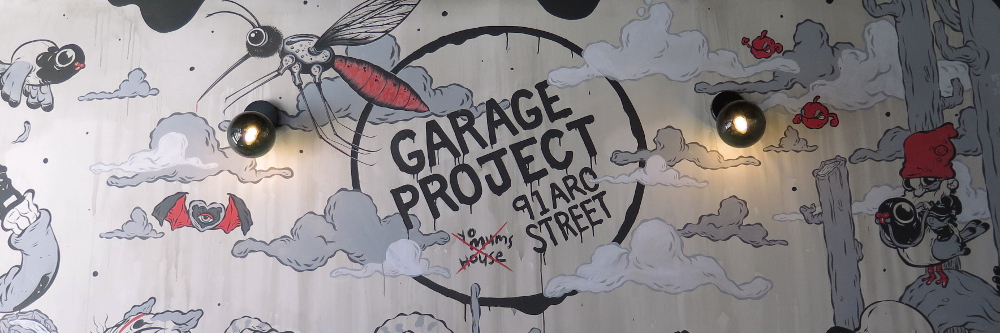
The main mural, though other art and easter eggs aboundAn open door, at last
Way back in August 2011, the Beer Diary Podcast’s first ‘away mission’ took place in the then-fledgling Garage Project, er, garage. Yesterday, George and I were invited to record another at the ‘dress rehearsal’ test-run of their new bar just up (and over) the road — which opens today. As it turned out,2 I spent most of the four year stretch between episodes actually working at the brewery myself and though the idea for this place was locked in a while ago, I didn’t personally work on it and not much non-paperwork progress had been made before I left. So it was a real treat to drop in and see what they’d been up to on the eve of this, their latest Next Big Thing. The episode will be online soon3 and disclaimers ahoy, obviously, given my lengthy association with the company and the fact we were there on a special invite and drinking on their dime, but I just wanted to share a few photos and some brief first impressions — because the place is a) gorgeous and b) interesting.
So last week, Asahi bought Mountain Goat. And earlier this month Heineken bought half of Lagunitas, then the company which makes Budweiser acquired something called Golden Road, and just under three years prior to that Emerson’s was subsumed within Lion.4 Meanwhile: Russia re-annexed Crimea, Pixar has so far spent a decade in the belly of Disney, India smack-merged with the Eurasian Plate fifty-million-or-so years back and (geologically speaking) threw up the Himalayas, and in four billion years our galaxy will non-violently combine with Andromeda and send countless millions of worlds swirling into new orbits until something else supermassive comes along ― plus ça change plus c’est la même chose.
The weekend was the fifth anniversary of, well, this thing. It was Sunday5 the 26th of September, 2010, when I first hit the ‘Publish’ button on anything here. I’ve since done so three hundred and forty times,6 for an overall rate of one post every five or six days — which just shows you the nonsense you can bury under an average. In truth, my activity here has fluctuated wildly, as has what you might call the mandate or mission. The initial intent was for this to be simply a backed-up and searchable version of the original, which itself was born about five years earlier when I scribbled the first-ever entry and transmogrified a blank notebook into a Beer Diary.7 On finally filling those pages and starting in on my second volume, five years and twenty-three days ago, I wanted to scan and upload its predecessor for safekeeping — and on account of the fact that you can’t grep dead trees.
What started as ‘Afterthoughts’ to that project quickly took over,8 though the Diaries still exist, gathering notes and bearing witness to my primary impressions of a beer or festival or whatnot. The revised and broadened nature of, well, this thing slowly found an audience and even picked up an award. But with a shift in my “day job” (to an actual day job), productivity here waned; the switch in what energy was used up during the day and what was left to burn off saw my swimming and gardening increase and writing time decline.9 I’m still attempting to rebalance all that again, with mixed success.
But anyway, I was put in mind of all of this — i.e., these five years and the utterly marvellous and/or baffling beers and occurrences and best-of-all people that have been bound up therein — by (of all things) a spot of spring cleaning a few days ago. In the kitchen cupboards at home was an unexpected trove of bottles that spanned such a swathe of time that I idly wondered if it covered the entirety of this thing’s existence and so had to look up the dates. And lo, here we are. And yes, they do. The Beer Diary started its life10 as a memory aid. Fitting, then, that a steady accumulation of forgotten things would furnish an excuse to think back, try to remember how these nearly-three-dozen bottles came to comprise my stash — and ponder what to do with them. Because some beers really do age spectacularly gracefully and can sublimely cap off an occasion. Others, of course, do not. Time, then, for a census of my accidental cellar, to see what it says about the last few years.
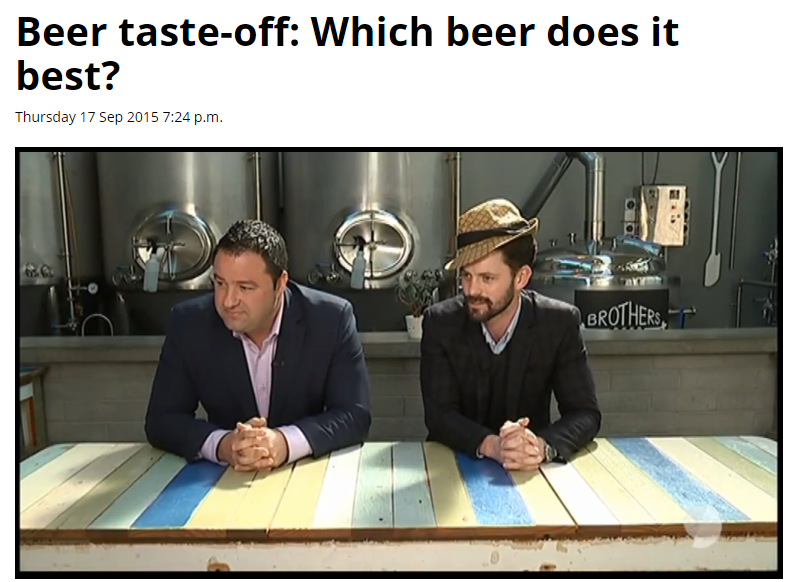
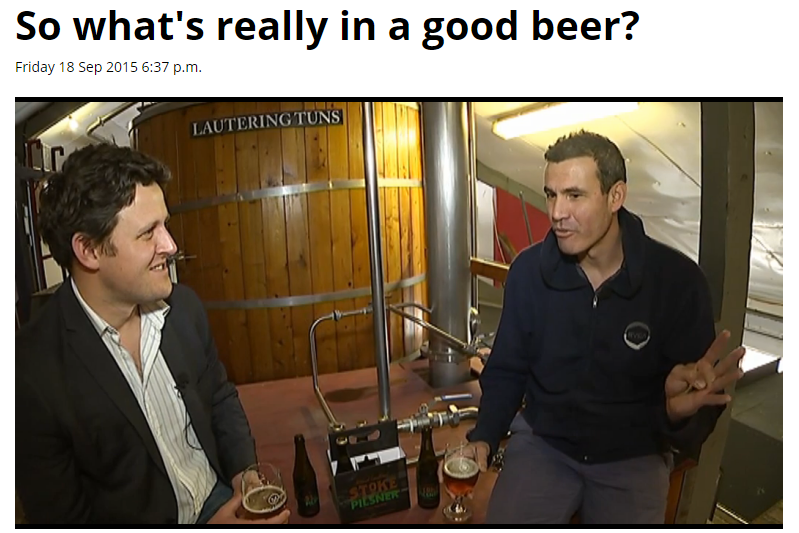
I spent a few hours on Saturday in the beer-bunker that is Hashigo Zake, in the company of two-dozen-or-so like-minded folks and enjoying the Brewers Guild Awards beaming at us from Auckland over a mercifully-dependable livestream. It was a properly marvellous occasion,11 and the Guild (with new host, Hilary Barry) put on a great show. It’s truly heartening to see the gradual evolution of the industry, particularly the maturation of the “craft”12 corner thereof as it becomes less of a niche or subculture and settles into being just part of the landscape. But as if on cue, two abysmal videos surfaced late last week13 — both from TV3’s ‘Story’ program — to remind us how far we have to go in terms of generalised acceptance and understanding. If you can stand the cringe, I think they’re worth watching for how instructively shallow and terrible they are.
Apples, oranges, and a silly hat
The first is styled as a taste-off between craft beer and quote-unquote “normal beer”, with the former signified by hats, hipsters and IPA and the latter bluntly equated with lager. Through four rounds of anonymous beers from unidentified styles served in a misnamed bar (“Beer Brothers”), the contestants follow their tired generational stereotypes and spend a suprisingly long time saying not very much of substance. The comparisons, kept completely mysterious, don’t really illuminate anything: were the beers they put up against each other even trying to do similar things or was this pure apples-to-oranges time-wasting that forgot that everything is best in its right place and something calm and friendly isn’t automatically inferior to some-other-thing attention-grabbing and audacious? Who the hell knows?
Heineken and other nonsense
Weirder and worse, though, is the rambling chat with Scott McCashin.14 It puts the “taste-test” piece to shame in terms of its wordy emptiness, with bonus side orders of contradiction and claptrap. The website dutifully regurgitates McCashin’s nonsense claim to being New Zealand’s first craft brewery — a boast which rings hollow whatever your definition of that contentious term15 — and you could easily come away from listening to the piece knowing a lot less than you did going in. It’s an absolute mess: mainstream beers are all ‘thinner’ and brewed with ‘less ingredients’ and perhaps particularly ‘less hops’, seemingly across the board — and Heineken fills a strange duel role as the name-dropped example of something flavourless and disappointing and the hoppy interesting thing that started a revolution. Craft beer, he says, “doesn’t have sugar added” which will come as a huge shock to generations of Belgians and Brits and others — if you don’t understand that sugar isn’t an inherently evil ingredient and can be used to make certain types of beer more enjoyable (rather than merely for cost-cutting) then you need to stop “educating” the public immediately and maybe reconsider whether this is the right business for you. Scott’s sole good point about the wide appeal of craft beer is lost under a mountain of muck and the reporter does nothing to tease out any clarity or coherence, instead belaboring a weird analogy about religion and dragging out the old “extreme beer is for hipsters” trope. His late realisation that all this uncritical dreck amounts to a mere ad is depressingly tossed aside.
Both of these pieces should’ve been spiked. There’s just no there there, in either of them. They add precisely nothing, merely reinforcing old clichés and (worse) muddying the water. The latter, in particular, is hopefully an embarrassment to the producer, editor, reporter and subject alike. If the brewery are delighted with it, or the Brewers’ Guild and/or their PR firm have chalked these up as marketing wins,16 then excuse me while I despair. There is a lot of good stuff going on in the beer-related and beer-adjacent media.17 Some of it, to my delight, percolates into the mainstream and is presented to diverse new eyeballs. But we all need to do more, and do it better, to break through the stereotypes and misinformation and nonsense.
Last weekend, a small army of judges assembled in Christchurch to assess a considerably-larger army of entries in the annual round of the local Brewers’ Guild Awards.18 We won’t know the results until next weekend19 but ― SPOILER ALERT ― Tui will not win the trophy for New Zealand styles. I don’t say this because I have any form as a gambler or guesser of these things, nor because it doesn’t deserve to score highly in the peculiar context of how beers are judged against predefined styles. Instead, it’s ruled out of trophy contention thanks to a new rule ― well, new-ish; it seems it was enacted last year, but I didn’t notice,20 and didn’t see anyone else mention it, but I think it’s worthy of some attention and some applause.
Truth in trophy-giving
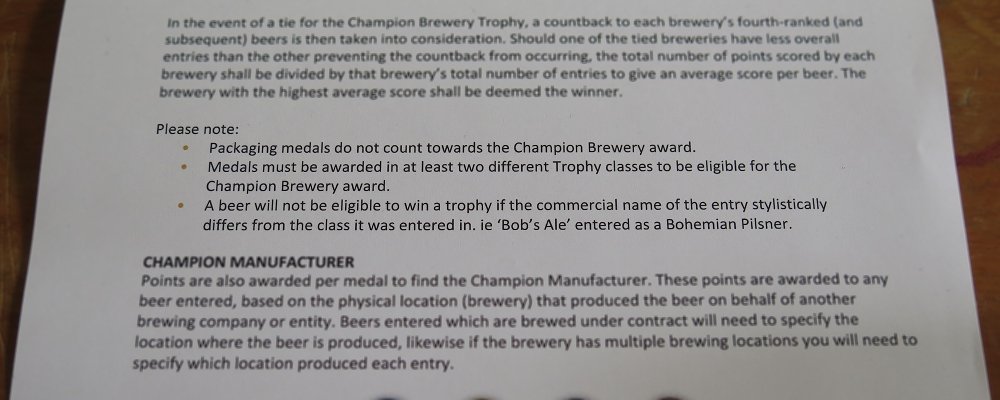
“A beer will not be eligible to win a trophy if the commercial name of the entry stylistically differs from the class it was entered in,” says the new21 rule. So Tui, a brown lager which fits squarely into the New Zealand Draught category despite being feverishly marketed as an “East India Pale Ale”22 can’t add to its small collection of silverware. Likewise there’ll be no more European Lager Styles trophies for the vienna lager which Speight’s dress up as “Distinction Ale”. And maybe there’s a case to be made that Boundary Road’s Haägen ― which wears a German flag and generally looks as if it’s trying to sneak into a bar using Beck’s driver’s licence as ID23 ― should see the end of its winning ways in the “New Zealand-style lager” category.
The general justification, anyhow, is solid: once you admit that the awards aren’t entirely an inwards-looking game that the industry just plays among itself, and instead you acknowledge that some non-zero fraction of the beer-buying public also gives a damn about them, then some kind of gatekeeping obligation kicks right in. It admittedly wouldn’t make the top million in a list of the world’s most-pressing problems, but beer producers have a longrunning habit of fudging the terminology around styles and processes when it suits them, and it really does get in the way of wider and deeper public knowledge which, in turn, presents an obstacle to more people more-easily finding more beers they’ll love. As people at the geekier end of the spectrum ― if not outright bending the needle on the nerd detector ― it’s all too natural for us to assume that “everyone” can see through the nonsense of some marketing departments, but spend a little while bartending or hosting tastings (as I, you know, do) and you’ll see how depressingly common assumptions like “yellow = lager, black = Guinness, anything in-between = ale” are, and how they get in the way of people’s tastes evolving ― in whatever direction and to whatever degree they feel like, of course. Misinformation is no good for nobody.
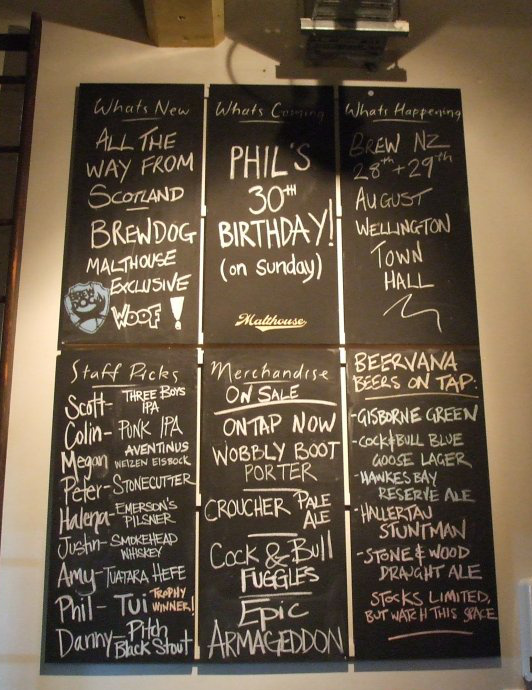
A lifetime ago, in beer years ― the Malthouse blackboard celebrating Tui’s 2009 trophy win (as a way to troll me for my birthday) plus several bonus cute little anachronisms
The tricky bit here is the two inevitable slippery slopes:24 1) how strictly to police this ― whether it really is just names and really is just outright contradictions that disqualify, or if implications as to styles in the wider presentation of a beer also counts (such as the label text, marketing bumf, and sales material ― where quite a few black lagers are gently implied to be, say, porters) ― but more-pressingly, 2) why just trophies, and not also medals and the mere participation in this process at all? The first question is of the kind that’s always hard to solve, but the second seems pretty plain; the same reasoning which now denies Tui its trophy should also hold back a medal.
And in fairness, this nonsense is perhaps starting to fade. Monteith’s “Winter Ale”, a frequently-award-winning doppelbock, is now actually marketed as a doppelbock. This, remember, from the same conglomerate that so consistently misrepresents Tui.25 These terms all mean something, and it’s not hard to imagine a future in which they might be more dependably informative ― which, again, would benefit just literally everyone. That the Brewers’ Guild has decided to more-carefully dole out the prestige of its trophies with this in mind is an excellent start.26 But only a start.
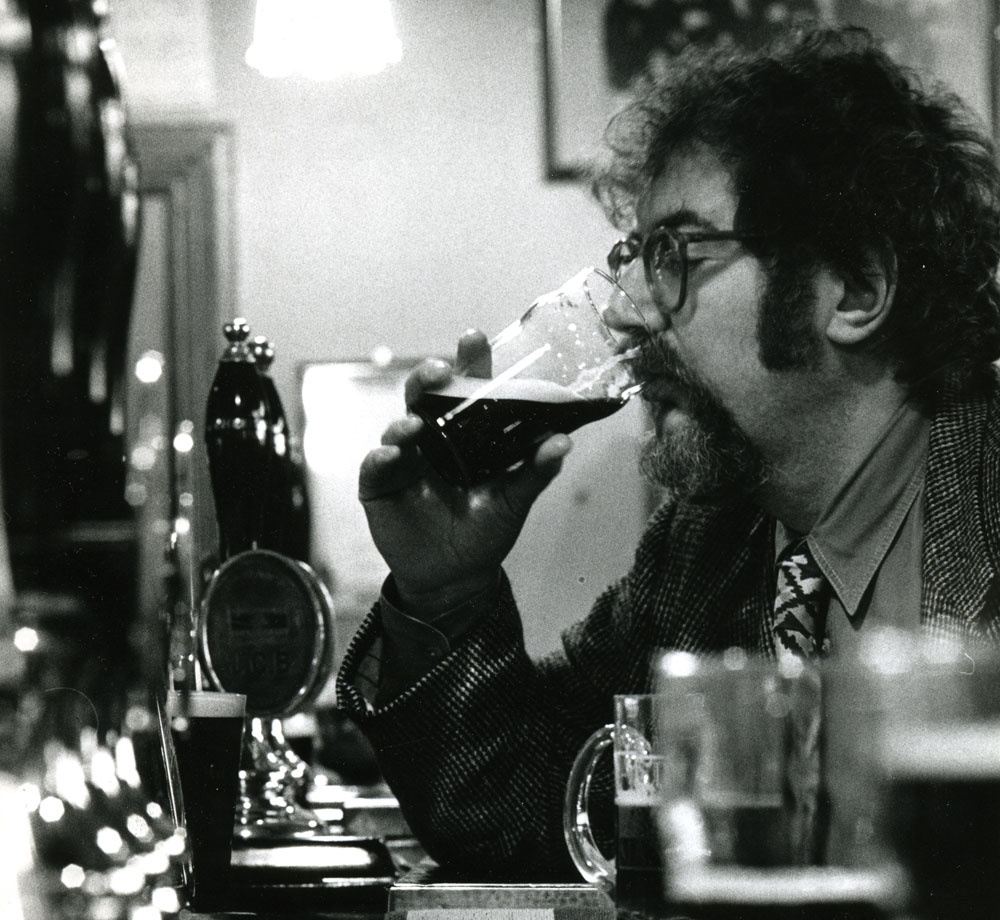
On our roughly spherical planet, yesterday is still today for a good while into tomorrow. Which is convenient, given my topic. But then, whenever you’re late to talk about an annual conjunction of timing, you’re also just really early.27 Anyway, the 30th of August is my birthday,28 and also the anniversary of the death of Michael Jackson — by which I mean the beer and whisky writer, not the other one. Given that it’s also usually the end of beer festival season here, it’s an excellent time to ponder inspirations and go back to the classics. And M.J. so radically overhauled and reinvigorated what became my avocation ― i.e., rambling about beer ― that he might as well count as its inventor. One of our fundamental organising principles, the notion of “beer styles”, was even his (surprisingly-recent) invention. You really can’t overstate the influence. And we’re lucky to have him looming over us, because he was damn good.
My first introduction to him was the Malt Whisky Companion that kept me sane while I was working at a bar with a dismal beer selection but an unexpectedly excellent shelf of five-dozen whiskies. Only later did I discover his work on beer — once I’d relocated to a better bar — but across both subjects he had the same easily readable, gently educational, and enthusiastically cosmopolitan passion for delicious things enjoyed mindfully and in context. Though it’s maybe too anachronistic a term for someone of his generation, he was a proper geek: just obviously keen to share his love of his favourite things with anyone who’d listen. Despite his (deserved) stature as the authoritative expert of his time, he doesn’t give off a whiff of snobbery. Read him on something that was ‘new’ and emerging and maybe much-maligned — like the craft beer movement of the U.S. in the eighties, or Japanese single malt whisky — and you’ll see him strongly rejecting the common and lazy assumption that different is automatically inferior. Instead, he’d pick up much-more-rewarding threads like the broad arc of history, how almost everything old is eventually new again, humanity’s long-running tradition of mucking with long-running traditions, and how fashion (for Islay whisky, or IPA) is just fashion and will one day be replaced.
I have my quibbles at the margins, naturally. He’s said some frankly-bananas things about glassware and serving temperatures, which I’ve reluctantly torn apart in User’s Guide-style seminars.29 And a lot of his work was in the Big Compendium Of Tasting Notes genre which has unfortunately spawned a generation of imitators30 who (to my mind) don’t do nearly as good a job of tempering that approach with the necessary context and quirky evocativeness which he excelled in.31 But he remains a subculture superhero, and a classic forever worth revisiting.
Sublime nightcap
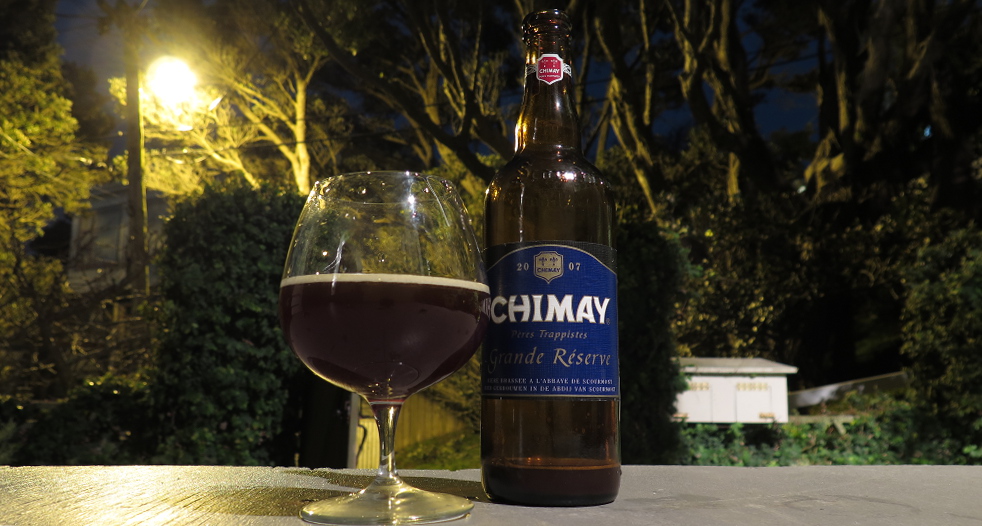
Speaking of which: this glorious thing. My friend and former bartending comrade32 Peter gave me a bottle of Chimay Grande Réserve33 for my birthday yesterday. It’s long been a favourite — since I plucked it out of a menu on a whim at an excellent little birthday dinner a decade or so ago, if memory serves — and this bottle happened to be from the 2007 vintage, so brewed the year we lost M.J.. No better way to mark the moment, salute your superhero, and end the evening, then, than to open it and pair it with a little of the Highland Park that the Companion made me fall in love with equally-many years ago.34 And it was simply sublime. Delicate and luxurious, rich but not overblown, full of perfectly nightcappy flavours like dark chocolate and deeply fruity port. We’d all be lucky if we were aging half as well.
So here’s to M.J., and to making the most of however-many orbits of the Sun you’re eventually allotted. As you go along, imagine his avuncular voice in your head — like Obi-Wan gently nudging Luke — as he says:35
I want you to think about every beer you put to your lips.
Diary III, page 36
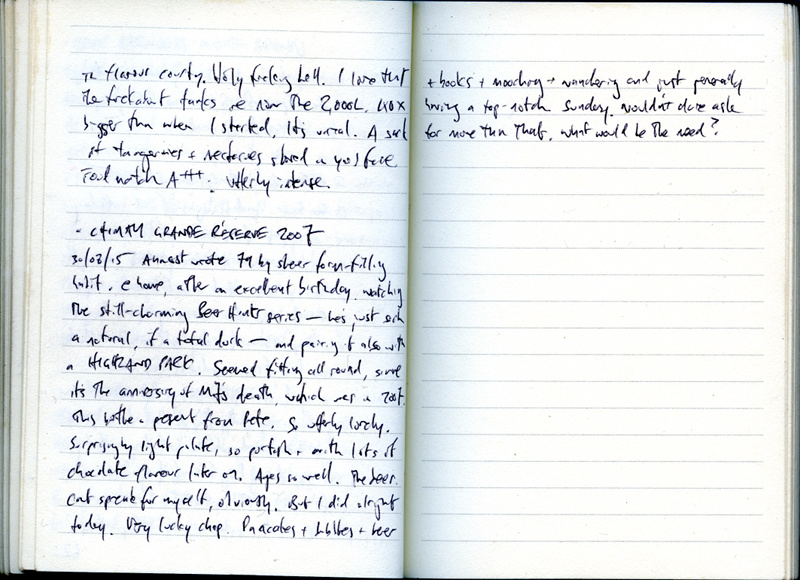
Original Diary entry: Chimay Grande Réserve 2007 — 30/08/15 Almost wrote 79 by sheer form-filling habit. @ home, after an excellent birthday. Watching the still-charming Beer Hunter series — he’s just such a natural, if a total dork — and pairing it also with a Highland Park. Seemed fitting all round, since it’s the anniversary of MJ’s death, which was in 2007. This bottle a present from Pete. So utterly lovely. Suprisingly light palate, so portish + with lots of chocolate flavour later on. Ages so well. The beer. Can’t speak for myself, obviously. But I did alright today. Very lucky chap. Pancakes + bubbles + beer + books + mooching + wandering and just generally having a top notch Sunday. Wouldn’t dare ask for more than that. What would be the need?
— Appendix: The Other M.J.
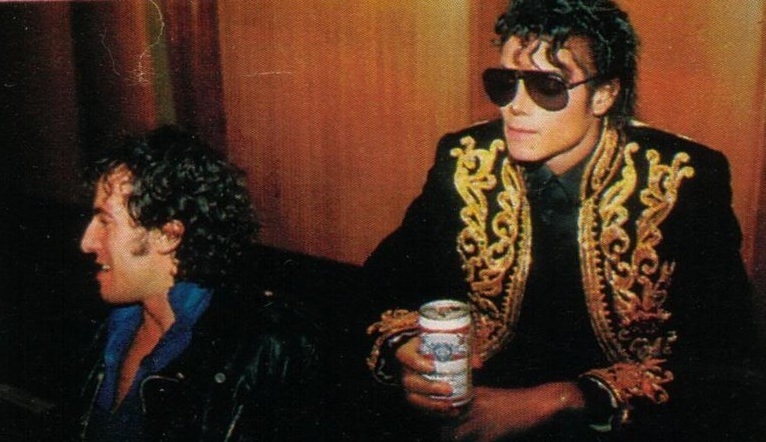
Meanwhile, an excellent coincidence of timing and timezones bundles the other Michael Jackson into all this: the 29th was his birthday and — as I said, given our roughly spherical planet — a good chunk of that day for an American just is the 30th for me (or the M.J., for that matter). To tie it all back to beer and other things of which I’m more-properly a fan, here he is drinking a Bud (remember: to each their own, and everything in its right place) while sitting next to Bruce Freakin’ Springsteen:
The Boss, the King of Pop, and the (alleged) King of Beers
Graham George Cook (23 August 1940 — 2 December 2014)
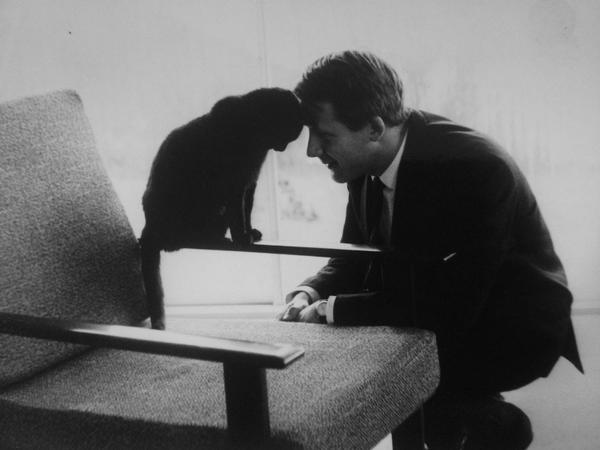
My father was the straightest-talking chap you’d likely ever have the privilege of meeting — except when he claimed not to like cats; that bit was palpable nonsense.36 He was calm and civilised in a way that’d make you doubt the efficacy of genetics if you’d met me, a loud bastard prone to ranting, first. But he certainly passed on his deep aversion to bullshit and his ability to enjoy simple pleasures, unworried by the vagaries of fashion or other peoples’ opinions as to their merits.
Today would’ve been his 75th birthday. Early last year, he was diagnosed with cancer of a sort and stage for which medical interventions were all likely to do much more harm than good. But he quietly beat his prognosis by a factor of two or three, for which we all counted ourselves hugely lucky, and (to borrow the useful cliché) he lived right up until he died ― even managing a half-round of golf and a tidy-up of the garden (his two enduringly-beloved hobbies) just days before the end. As he’d planned (and insisted, with his beautifully serene stubbornness) he died at home with his family, and as I watched I was awed at how he quietly and deftly snatched a fistful of dignity from the capriciousness of disease and death. If you have to go ― and I’m afraid I must inform you that you almost certainly do have to go, some time, somehow ― you’d do well to go out like he did; with pragmatism, authenticity, and grace.
He would’ve bought me my first beer, and I probably bought him his last. The beer that wound up as my first doubtless actually started out in his glass: I was a weird kid37 and took to bitter things, like coffee and beer, unusually early and remember wrangling small samples of each quite often. At some point in my teens ― probably during my parents’ thirtieth anniversary party ― my ration was upgraded to a whole serving. Dad’s tastes tended unashamedly towards the classic simple pale lager, stripped of any parochialism or brand loyalty. He was always open to trying the madder things I’d bring to share, but his favourites were his favourites — and there’s not a damn thing wrong with that — so I did my best to keep his fridge stocked with Dad-friendly stuff, for him and his visitors. Occasionally, in some kind of shock, people would comment on the ‘mainstream’ things I’d drink at his house, but I was having a beer with my father, and it was invariably quietly-but-utterly marvellous.
So today, I’m going to dig a hole so we can inter his ashes and plant a tree. After that, I’m going to have something that might seem out of character for a proud beer geek — but it won’t be. I’ll have a beer for my father, since I can no longer have one with him.
Most beer writing is crap.38 This should be unsurprising and uncontroversial for the simple reason that most of everything is crap. Enshrined as Sturgeon’s law, this isn’t a cynical or depressing conclusion; just a sound observation and call for better mental hygiene. But that strangely-comforting general cause shouldn’t blind us to the idiosyncratic causes of crapness in beer commentary — insidious things which we should strive to keep in mind. Reading with your faculties more-sharply engaged is just as life-enhancing as drinking more thoughtfully is. I recommend both.
Neither the best, nor the last — mercifully
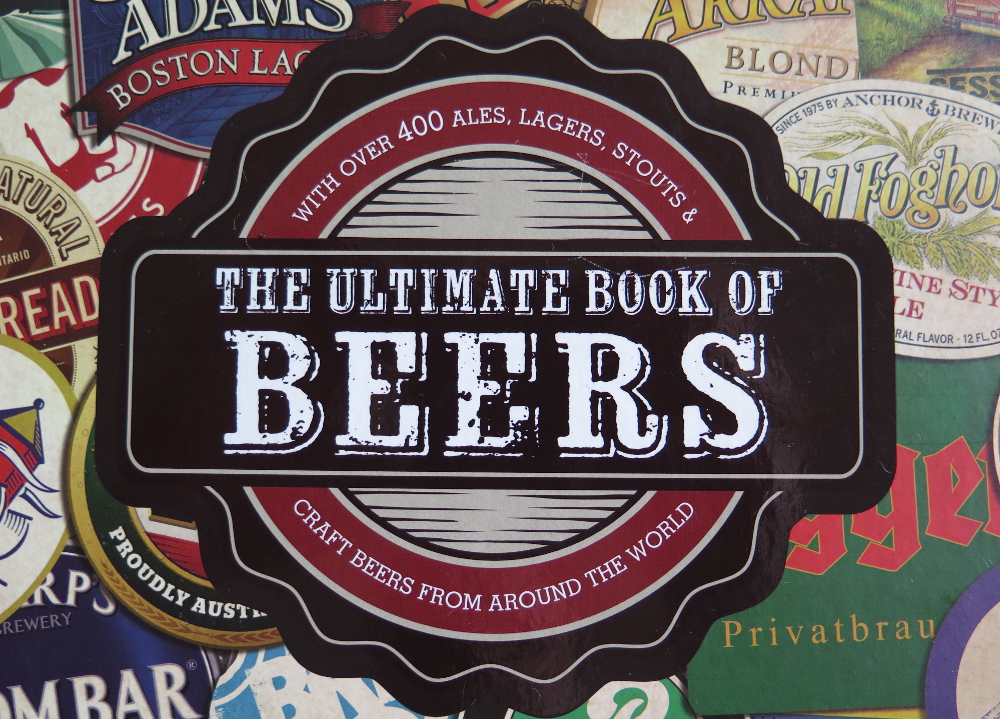
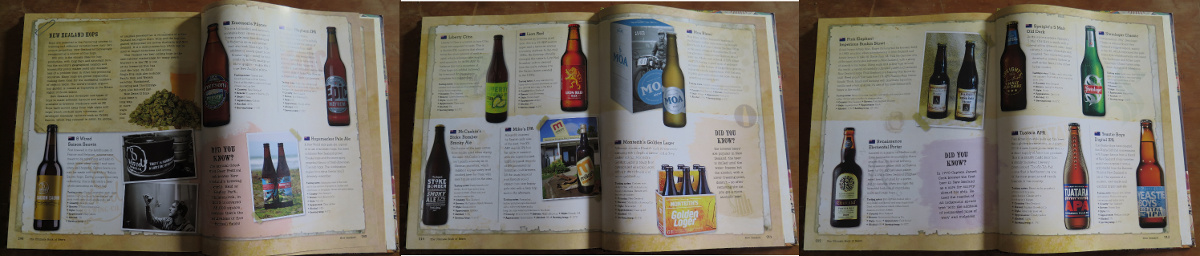
I was forcefully reminded of all this when I picked up39The Ultimate Book of Beers, a glossy British publication40 from just last year which attempts to round-up the world and history of beer by way of two hundred pages and four hundred examples. The result is, quite frankly, terrible. But it is at least instructively terrible, and that makes it great — even though it’s not the greatness they were seeking.
Too much beer writing sinks to the level of crap insidiously, because it either is or just appears like it might be advertising in drag; most amateur and professional commentators still won’t spell out commercial entanglements with their subjects (which might account for surprisingly-strong praise or mysteriously-missing criticism, or both), or even just note that the proximate cause for them talking about some particular thing at all is that free samples from the brewery arrived in the post.41 But sometimes, you don’t even need to start pondering potential moral wrongness; occasionally something will just overdose on old-fashioned factual wrongness. Here, there were some telltale false steps early on — like retelling a debunked version of the history of IPA that’d make Martyn Cornell spin in his grave, if he wasn’t still alive — but the wheels most-obviously fell off, for me, when I flipped ahead to the New Zealand section, curious to see their summation of the place where I live, and (after all) usually drink.
New Zealand beer, through a lens of significant weirdness
The three-spread section features sixteen beers42 and manages to make errors both trifling and troubling which vary from obvious marketing-guff passed on as gospel to patently bizarre weirdness pulled from nowhere obvious. They get their hop varieties confused, slightly mangle a few brewery and beer names, entirely elide the reality and centrality of contract brewing in our modern scene (Epic, Bach, and Yeastie Boys are all listed as if they were bricks-and-mortar operations),43 completely ignore the many-branded natures of our bigger companies,44 and a give over a half-page section to a beer (namely Pink Elephant’s ‘Imperious Rushin Stowt’) that hadn’t been brewed for several years when the book was published.
The selection, as a group, is also pants-on-head nonsensical. This isn’t even destined to be useful to future generations as a (flawed) historical document because the sampling is so un-self-consciously bizarre: it doesn’t track with present or historical popularity, or award-winningness, or uniqueness, or any kind of story about what we’re doing here. It’s not even a case of “we went there and this is what we had”, which would at least be obviously personal and idiosyncratic. My best guess is that the breweries listed were the quickest to respond to requests for photos and blurbs — not a great way to go about an “ultimate” survey.
Disinfobox
Then there’s the utterly baffling claim in a break-out text box that “ice brewed beers are popular in New Zealand”. This is an unbelievably niche practice of freezing some of the water out of beer to make what remains stronger, and you’d struggle to find more than one example around here, if that.45 When the answer to one Did you know? aside is “no, I fucking did not, because I understand what ‘knowledge’ is and your statement was complete bollocks”, all the others are cast into question. There’s basically one of these putative factoids per page, and while I’m a determined collector of trivia I’m nowhere near expert enough to rule on most of the others. The presence of that, though, is an unpromising sign. Which is a perfect microcosm for the rest of the damn book — given the smattering of errors and distortions I can spot in the accounts of beers I know, how can I put any stock in the listings for things I’d never heard of? Easy: I can’t. If they so weirdly and subtly and pointlessly flub the story of beer in New Zealand — a country so historically and culturally linked to theirs that their flag is (for now) on ours — there’s scant hope for the rest of the planet.
All of this is emblematic of wider problems: this area — like all fields of criticism and reportage — is beset by challenges of overturning myth, unpacking spin, overcoming biases, and navigating conflicts of interest. I don’t know nearly enough about the creation of this book to accuse it of falling foul on the ethics — that’s a minefield for another time and another example — but the point is that you need to be wary of crapness in all its forms and whatever its cause. And when you hear the clang of a factual error or catch the whiff of an un-declared conflict of interest, hold on to that skepticism. We should do more to make it unnecessary — and it wouldn’t take much; a little more humility, a little more honesty — but unfortunately, it’ll still serve you well.
I am a very happy beerperson. That was a huge festival season — the run-up to Beervana last weekend was filled with plenty of other more-or-less-related Things To Do — and now it’s over but for the mopping up and the inevitable retrospectives. I feel like I was a little close to the festival this year, and anyway attended it in a strange and many-hatted capacity, so I’ll leave those to others for now. For myself, I’m feeling unusually zen and grateful, and feel like I should basically footnote the real world with acknowledgements. If you’ll let me set aside my traditionally ranty manner a moment, massive thanks to —
Emma (at home) and Sean and the entire Golding’s crew (at work), for accommodating my multitasking and forgiving the shirking of (or distraction-damage to) my usual duties which it entailed.
My fellow seminar-wranglers — George (podcast accomplice and whatnot); Megan (friend of the show); plus Amber, Ben, Hadyn,46 Michelle, and Tim (collectively of Beyond The Achievements, which will also be helping get some of the sessions online for your after-the-fact viewing pleasure) — who pulled together a varied programme of panels and presentations in very short order.
Beth Brash, the new Festival Overboss (and also friend of the show), for trusting and/or saddling us with control of the seminar room. I’m a big fan of such things at beer festivals, massive nerd that I am.
Our seminar presenters — lawyer Paul Johns; can-maker John Savery; local brewers Ava Wilson (Beer Baroness), Kieran Haslett-Moore (North End), Matt Warner (ParrotDog), and Tracy Banner (Sprig & Fern); visiting brewers Darron Welch (Pelican), Jacob Leonard (Breakside), Jayne Lewis (Two Birds), and Tyler Brown (Barley Brown’s); and Victoria University scientist Dr Nicola Gaston.47
Providers and beer and props for the seminars — the Brewers’ Guild of New Zealand, Visy, Lion, North End, ParrotDog, Beer Baroness, Stone & Wood, Garage Project, Tuatara, Two Birds, Breakside, and Barley Brown’s (and also to Cryer Malt, who brought in and signed off on the last three). 48 Thanks also, with a bonus apology, to Te Aro Brewing Co., and the Fork & Brewer, who rescued the beer supply for one seminar only to have me forget them in this post’s first version.
Luke Robertson of Ale Of A Time, who invited George and I to sit down and record a podcast episode with him — which will almost certainly be online in a speedier fashion than the entire calendar year it took us to get his episode of ours up.
It was a great event all round, and the thousands who showed up to enjoy it make worthwhile the work of the dozens — paid and unpaid — who make it happen. I’m sure I’ll get into some kind of debrief or rundown of highlights of the festival as a festival at some point, but for now I’m still just chuffed to’ve been part of Beervana 2015 as a people-powered beer-related-enjoyment-dispensing machine. Bring on 2016.