
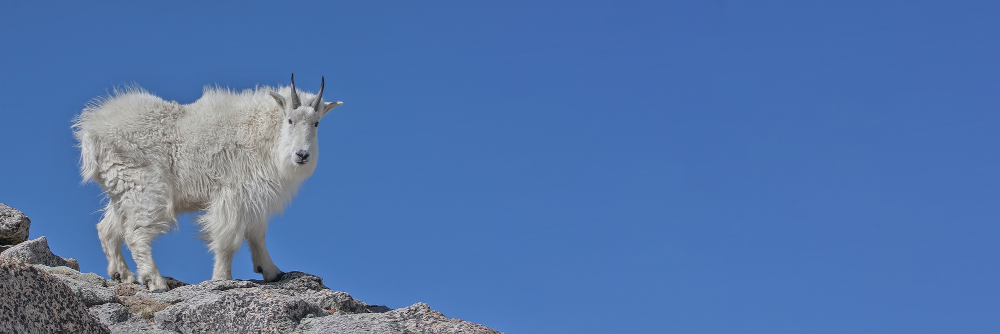
The Australian International Beer Awards is one of the world’s largest competitions of its kind.1 Results of the 2026 competition were announced recently, crowning over a dozen different ‘champions’ of various sizes and classes — including an IPA from Mountain Goat as the Champion Australian Beer, hence the beastie in banner image here2 — and handing out more than two hundred gold medals. A lot of noteworthy detail gets lost in the noise. Luckily, I’ve got a way to contextualise it all.
The organisers publish a list of every beer entered, even if it didn’t earn a medal.3 So I tabulate them up, and work out each entrant’s overall medal percentage (MPC) and their points per entry (PPE) by adding 3 for gold, 2 for silver, and 1 for bronze, then dividing by how many beers they submitted. This gives us two useful measures of performance to compare. 76.6% of all beers were awarded a medal this year, and the median PPE was 1.14 (i.e., half of the breweries scored at that level or better) — if you focus on the Australian entrants only, those rise slightly to 80.1% and 1.25.
Performance at the 2026 Australian International Beer Awards by breweries entering 5+ beers (or winning a trophy with less)
N = no. of entries, MPC = medal percentage, PPE = points per entry, T = style trophies, G/S/B = medals,  = Champion brewery,
  = brewer of Champion beer, all entrants Australian unless noted
| Brewery | n | MPC | PPE | T | G | S | B |
|---|---|---|---|---|---|---|---|
| King Road (🏆 Small Aus. & Indie) | 11 | 90.9 | 2.00 | 1 | 3 | 6 | 1 |
| Altitude (NZ) (🏆 Small Int'l.) | 20 | 100 | 1.90 | 2 | 5 | 8 | 7 |
| Hawkesbury Brewing (🏆 Med. Aus.) | 10 | 90 | 1.90 | 1 | 3 | 4 | 2 |
| COEDO (Japan) (🏆 Med. Int'l.) | 7 | 85.7 | 1.43 | 0 | 1 | 2 | 3 |
| Pirate Life (🏆 Large Aus.) | 13 | 84.6 | 1.77 | 0 | 5 | 2 | 4 |
| Garage Project (NZ) (🏆 Large Int'l.) | 16 | 93.8 | 1.75 | 0 | 2 | 9 | 4 |
| Hawkers (🏆 Victorian Brewery) | 17 | 88.2 | 1.94 | 2 | 5 | 8 | 2 |
| Stomping Ground (🍺 Indie) | 17 | 100 | 1.65 | 1 | 2 | 7 | 8 |
| Mountain Goat (🍺 Aus.) | 17 | 88.2 | 1.41 | 1 | 2 | 5 | 8 |
| Zebra (China) (🍺 Int'l.) | 5 | 60 | 1.20 | 1 | 1 | 1 | 1 |
| Froth (Best New Exhibitor) | 13 | 84.6 | 1.54 | 0 | 2 | 5 | 4 |
| Shack Bay ("Nomad" brewer award) | 3 | 100 | 2.00 | 0 | 1 | 1 | 1 |
| Slipstream | 37 | 94.6 | 1.84 | 0 | 10 | 13 | 12 |
| Carlsberg China | 30 | 76.7 | 1.17 | 0 | 2 | 8 | 13 |
| 4 Pines | 24 | 87.5 | 1.58 | 0 | 4 | 9 | 8 |
| Spring Valley (Japan) | 23 | 69.6 | 1.09 | 1 | 2 | 5 | 9 |
| Gage Roads | 22 | 86.4 | 1.73 | 0 | 7 | 5 | 7 |
| Coopers | 20 | 75 | 1.20 | 0 | 2 | 5 | 8 |
| Bridge Road | 20 | 90 | 1.55 | 0 | 1 | 11 | 6 |
| Hong Kong Beer Co. (HK) | 19 | 68.4 | 1.21 | 0 | 1 | 8 | 4 |
| Balter | 18 | 88.9 | 1.83 | 0 | 4 | 9 | 3 |
| Felons | 18 | 77.8 | 1.44 | 0 | 3 | 6 | 5 |
| Blackman's | 18 | 77.8 | 1.44 | 0 | 2 | 8 | 4 |
| Margaret River Beer Co. | 17 | 94.1 | 1.88 | 0 | 4 | 8 | 4 |
| Reckless | 17 | 70.6 | 1.18 | 0 | 2 | 4 | 6 |
| Limestone Coast Brewing Ops. | 17 | 58.8 | 0.94 | 0 | 1 | 4 | 5 |
| Philter | 16 | 93.8 | 1.94 | 0 | 4 | 8 | 3 |
| Black Hops | 16 | 93.8 | 1.44 | 0 | 1 | 6 | 8 |
| Jervis Bay Brewing Co. | 16 | 87.5 | 1.38 | 0 | 1 | 6 | 7 |
| Moffat Beach Brewing Co. | 16 | 87.5 | 1.38 | 0 | 1 | 6 | 7 |
| Sydney Brewery | 16 | 87.5 | 1.25 | 0 | 0 | 6 | 8 |
| Green Beacon | 16 | 62.5 | 0.81 | 0 | 0 | 3 | 7 |
| CBCo | 15 | 93.3 | 1.67 | 0 | 2 | 7 | 5 |
| Asahi Abbotsford | 14 | 100 | 1.93 | 0 | 3 | 7 | 4 |
| Asahi Yatala | 14 | 100 | 1.57 | 0 | 2 | 4 | 8 |
| Chuck & Son's | 14 | 64.3 | 1.21 | 0 | 2 | 4 | 3 |
| Stone & Wood | 14 | 92.9 | 1.50 | 0 | 1 | 6 | 6 |
| Boundary Island | 14 | 71.4 | 1.29 | 0 | 1 | 6 | 3 |
| Kumbat (China) | 14 | 64.3 | 1.07 | 0 | 1 | 4 | 4 |
| Brick Lane | 13 | 100 | 1.92 | 0 | 4 | 4 | 5 |
| Bright | 13 | 92.3 | 1.77 | 0 | 2 | 7 | 3 |
| Kaiju! | 13 | 92.3 | 1.46 | 0 | 2 | 3 | 7 |
| No-Li Brewhouse (USA) | 13 | 38.5 | 0.54 | 0 | 1 | 0 | 4 |
| Heineken Brasil | 13 | 30.8 | 0.38 | 0 | 0 | 1 | 3 |
| Shelter | 12 | 91.7 | 1.75 | 0 | 2 | 6 | 3 |
| Boston Brewing Co. | 12 | 100 | 1.50 | 0 | 2 | 2 | 8 |
| Rebellion | 12 | 66.7 | 1.08 | 0 | 1 | 3 | 4 |
| Thorny Devil | 12 | 91.7 | 1.17 | 0 | 0 | 3 | 8 |
| Three Sisters (NZ) | 11 | 90.9 | 1.73 | 0 | 1 | 7 | 2 |
| King River Brewing Co. | 11 | 72.7 | 1.27 | 1 | 1 | 4 | 3 |
| Mahou (Spain) | 11 | 45.5 | 0.64 | 0 | 0 | 2 | 3 |
| Frogs Hollow | 11 | 54.5 | 0.64 | 0 | 0 | 1 | 5 |
| Cypher | 10 | 90 | 2.00 | 0 | 3 | 5 | 1 |
| Cheeky Monkey | 10 | 90 | 1.70 | 0 | 2 | 4 | 3 |
| nBeer (China) | 10 | 90 | 1.60 | 0 | 2 | 3 | 4 |
| Slowboat (China) | 10 | 80 | 1.40 | 1 | 2 | 2 | 4 |
| Perentie Brewing Co. | 10 | 100 | 1.90 | 0 | 1 | 7 | 2 |
| District | 10 | 100 | 1.70 | 0 | 1 | 5 | 4 |
| Hawke's | 10 | 100 | 1.60 | 0 | 1 | 4 | 5 |
| Esker Beer Co. | 10 | 100 | 1.80 | 0 | 0 | 8 | 2 |
| Jing-a (China) | 10 | 80 | 1.20 | 0 | 0 | 4 | 4 |
| Nail | 9 | 100 | 2.00 | 0 | 2 | 5 | 2 |
| Waihenstephaner (Germany) | 9 | 77.8 | 1.44 | 0 | 2 | 2 | 3 |
| Crafty Monk | 9 | 100 | 1.67 | 0 | 1 | 4 | 4 |
| The Valley Brewhouse | 9 | 77.8 | 1.44 | 0 | 1 | 4 | 2 |
| Otherside | 9 | 100 | 1.89 | 0 | 0 | 8 | 1 |
| Daobrew (China) | 9 | 77.8 | 0.89 | 0 | 0 | 1 | 6 |
| Broulee | 9 | 44.4 | 0.56 | 0 | 0 | 1 | 3 |
| Mismatch | 8 | 100 | 2.00 | 1 | 3 | 2 | 3 |
| Moo Brew | 8 | 87.5 | 1.75 | 0 | 2 | 3 | 2 |
| TWØBAYS | 8 | 87.5 | 1.75 | 0 | 2 | 3 | 2 |
| Half Pace | 8 | 75 | 1.63 | 1 | 2 | 3 | 1 |
| White Bay | 8 | 87.5 | 1.75 | 0 | 1 | 5 | 1 |
| Urbrew (China) | 8 | 75 | 1.38 | 0 | 1 | 3 | 2 |
| Blasta | 8 | 75 | 1.13 | 0 | 1 | 1 | 4 |
| Hangzhou Cheerday (China) | 8 | 62.5 | 1.00 | 0 | 1 | 1 | 3 |
| Dangerous Ales | 8 | 87.5 | 1.50 | 0 | 0 | 5 | 2 |
| Shiner (USA) | 8 | 75 | 1.00 | 0 | 0 | 2 | 4 |
| Pacific Ocean Brewing | 8 | 62.5 | 0.88 | 0 | 0 | 2 | 3 |
| 1826 Collective (Singapore) | 8 | 62.5 | 0.75 | 0 | 0 | 1 | 4 |
| Coles Liquor | 8 | 62.5 | 0.75 | 0 | 0 | 1 | 4 |
| Hepburn Springs Brewing Co. | 8 | 37.5 | 0.38 | 0 | 0 | 0 | 3 |
| Capital | 7 | 85.7 | 1.71 | 0 | 2 | 2 | 2 |
| Brewdog Australia | 7 | 85.7 | 1.57 | 0 | 2 | 1 | 3 |
| Village Days | 7 | 71.4 | 1.57 | 0 | 1 | 4 | 0 |
| Rocky Ridge | 7 | 100 | 1.71 | 0 | 1 | 3 | 3 |
| Noodledoof | 7 | 85.7 | 1.43 | 0 | 1 | 2 | 3 |
| Renaissance (NZ) | 7 | 71.4 | 1.29 | 0 | 1 | 2 | 2 |
| Salt Brewing Co. | 7 | 71.4 | 1.29 | 0 | 1 | 2 | 2 |
| Urban Alley | 7 | 57.1 | 1.14 | 0 | 1 | 2 | 1 |
| Beerland | 7 | 42.9 | 0.86 | 0 | 1 | 1 | 1 |
| Hemingway's | 7 | 85.7 | 1.14 | 0 | 1 | 0 | 5 |
| Endeavour - Pinnacle Drinks | 7 | 14.3 | 0.43 | 0 | 1 | 0 | 0 |
| Seeker | 7 | 100 | 1.71 | 0 | 0 | 5 | 2 |
| Bailey | 7 | 100 | 1.57 | 0 | 0 | 4 | 3 |
| Shining Peak (NZ) | 7 | 100 | 1.57 | 0 | 0 | 4 | 3 |
| Good Land | 7 | 85.7 | 1.43 | 0 | 0 | 4 | 2 |
| Ocean Reach | 7 | 100 | 1.43 | 0 | 0 | 3 | 4 |
| Mitta Mitta Brewing Co. | 7 | 85.7 | 1.29 | 0 | 0 | 3 | 3 |
| Indian Ocean Brewing Co. | 7 | 71.4 | 1.14 | 0 | 0 | 3 | 2 |
| Asahi Laverton | 7 | 85.7 | 1.14 | 0 | 0 | 2 | 4 |
| Richkat (China) | 7 | 85.7 | 1.14 | 0 | 0 | 2 | 4 |
| Smiley Brewing Co. | 7 | 85.7 | 1.14 | 0 | 0 | 2 | 4 |
| Brugan | 7 | 71.4 | 1.00 | 0 | 0 | 2 | 3 |
| Freshwater | 7 | 71.4 | 1.00 | 0 | 0 | 2 | 3 |
| Hargreaves Hill | 7 | 57.1 | 0.86 | 0 | 0 | 2 | 2 |
| Samuel Adams (USA) | 7 | 57.1 | 0.86 | 0 | 0 | 2 | 2 |
| San Miguel (Philippines) | 7 | 42.9 | 0.71 | 0 | 0 | 2 | 1 |
| Engkanto (Philippines) | 7 | 71.4 | 0.86 | 0 | 0 | 1 | 4 |
| Shanghai Witchcraft (China) | 7 | 57.1 | 0.71 | 0 | 0 | 1 | 3 |
| Tribe Breweries | 7 | 57.1 | 0.71 | 0 | 0 | 1 | 3 |
| Maggie Island Brewery | 7 | 28.6 | 0.43 | 0 | 0 | 1 | 1 |
| Uraidla | 6 | 100 | 2.17 | 0 | 2 | 3 | 1 |
| Rhyme X Reason (NZ) | 6 | 100 | 2.00 | 0 | 2 | 2 | 2 |
| Homestead | 6 | 83.3 | 1.67 | 0 | 2 | 1 | 2 |
| Brave (NZ) | 6 | 100 | 1.83 | 0 | 1 | 3 | 2 |
| Merino Brewery | 6 | 83.3 | 1.50 | 0 | 1 | 2 | 2 |
| Brisbane Brewing Co. | 6 | 66.7 | 1.33 | 0 | 1 | 2 | 1 |
| Stoic Brewing | 6 | 83.3 | 1.33 | 0 | 1 | 1 | 3 |
| Little Bang | 6 | 66.7 | 1.00 | 0 | 1 | 0 | 3 |
| Peiping Machine (China) | 6 | 83.3 | 1.50 | 0 | 0 | 4 | 1 |
| Common People | 6 | 100 | 1.50 | 0 | 0 | 3 | 3 |
| First Light | 6 | 100 | 1.50 | 0 | 0 | 3 | 3 |
| Jetty Road | 6 | 100 | 1.50 | 0 | 0 | 3 | 3 |
| Seasonal Brewing Co. | 6 | 83.3 | 1.33 | 0 | 0 | 3 | 2 |
| Aether | 6 | 66.7 | 1.17 | 0 | 0 | 3 | 1 |
| Bucketty’s | 6 | 66.7 | 1.17 | 0 | 0 | 3 | 1 |
| Saigon Beer (Vietnam) | 6 | 100 | 1.33 | 0 | 0 | 2 | 4 |
| Big Niles | 6 | 83.3 | 1.17 | 0 | 0 | 2 | 3 |
| Seabreeze | 6 | 83.3 | 1.17 | 0 | 0 | 2 | 3 |
| Baladin (Italy) | 6 | 66.7 | 1.00 | 0 | 0 | 2 | 2 |
| Hop Nation | 6 | 66.7 | 1.00 | 0 | 0 | 2 | 2 |
| Underdog (Thailand) | 6 | 66.7 | 1.00 | 0 | 0 | 2 | 2 |
| Hard Road | 6 | 66.7 | 0.83 | 0 | 0 | 1 | 3 |
| Prancing Pony | 6 | 66.7 | 0.83 | 0 | 0 | 1 | 3 |
| Daily Beer (Korea) | 6 | 50 | 0.67 | 0 | 0 | 1 | 2 |
| Hop Hen | 6 | 100 | 1.00 | 0 | 0 | 0 | 6 |
| Wizard (Thailand) | 6 | 33.3 | 0.33 | 0 | 0 | 0 | 2 |
| Tawandang Brewery 1999 (Thailand) | 6 | 16.7 | 0.17 | 0 | 0 | 0 | 1 |
| Principle | 5 | 100 | 2.00 | 0 | 2 | 1 | 2 |
| Kick Back | 5 | 80 | 1.80 | 0 | 2 | 1 | 1 |
| Fresh Beer 30km (China) | 5 | 100 | 1.80 | 0 | 2 | 0 | 3 |
| James Boags | 5 | 60 | 1.40 | 1 | 2 | 0 | 1 |
| Ward’s Brewery | 5 | 80 | 1.60 | 1 | 1 | 2 | 1 |
| 49th State (USA) | 5 | 80 | 1.60 | 0 | 1 | 2 | 1 |
| Full Moon (Thailand) | 5 | 100 | 1.60 | 0 | 1 | 1 | 3 |
| Earth Beer Co. | 5 | 60 | 1.20 | 0 | 1 | 1 | 1 |
| Suapobbe (China) | 5 | 60 | 1.20 | 0 | 1 | 1 | 1 |
| Braeside | 5 | 40 | 1.00 | 0 | 1 | 1 | 0 |
| Watts River Brewing | 5 | 100 | 1.40 | 0 | 1 | 0 | 4 |
| Love Shack | 5 | 60 | 1.00 | 1 | 1 | 0 | 2 |
| Shedshaker | 5 | 60 | 1.00 | 0 | 1 | 0 | 2 |
| Oak Haven / Gosford RSL | 5 | 40 | 0.80 | 0 | 1 | 0 | 1 |
| Phat Brew Club | 5 | 100 | 1.80 | 0 | 0 | 4 | 1 |
| CUB Cascade | 5 | 100 | 1.60 | 0 | 0 | 3 | 2 |
| Deep Elite | 5 | 80 | 1.40 | 0 | 0 | 3 | 1 |
| No Eye Deer | 5 | 80 | 1.40 | 0 | 0 | 3 | 1 |
| 10 Toes | 5 | 100 | 1.40 | 0 | 0 | 2 | 3 |
| Burleigh | 5 | 100 | 1.40 | 0 | 0 | 2 | 3 |
| Hiker | 5 | 100 | 1.40 | 0 | 0 | 2 | 3 |
| Shaanxi Fubixing Wine Co. (China) | 5 | 100 | 1.40 | 0 | 0 | 2 | 3 |
| Mountain Monk | 5 | 80 | 1.20 | 0 | 0 | 2 | 2 |
| Damm (Spain) | 5 | 60 | 1.00 | 0 | 0 | 2 | 1 |
| King Tide | 5 | 60 | 1.00 | 0 | 0 | 2 | 1 |
| Spinifex | 5 | 100 | 1.20 | 0 | 0 | 1 | 4 |
| Sprig + Fern (NZ) | 5 | 100 | 1.20 | 0 | 0 | 1 | 4 |
| Foxdog | 5 | 80 | 1.00 | 0 | 0 | 1 | 3 |
| Trumer (USA) | 5 | 80 | 1.00 | 0 | 0 | 1 | 3 |
| Australian Beer Co. | 5 | 60 | 0.80 | 0 | 0 | 1 | 2 |
| Bicheno | 5 | 60 | 0.80 | 0 | 0 | 1 | 2 |
| Tooheys Brewery | 5 | 60 | 0.80 | 0 | 0 | 1 | 2 |
| Hudson Brewing | 5 | 100 | 1.00 | 0 | 0 | 0 | 5 |
| State of Play (NZ) | 5 | 80 | 0.80 | 0 | 0 | 0 | 4 |
| Heaps Normal | 5 | 60 | 0.60 | 0 | 0 | 0 | 3 |
The table above shows the results for every entrant with five or more beers in the running, cutting out the noisier end of the data but still covering most of the field and all the trophy winners.4 The headline-getting champions are grouped together by default for easy comparison, but you can click a column title to re-sort the data.
Standing out from the herd, mathematically speaking
Awards night itself builds up to the ‘Champion Beer’ announcements, the winners of which are decided after a final tasting round of all 21 trophy winners of the various style categories — something that must be an absolute rollercoaster for the judging panel’s palates. Despite often soaking up an outsized share of media attention — and indeed, two-thirds of the organiser’s own press release — these ‘Best in Show’ recipients are mostly outside the scope of my ‘batting averages’ number-crunching here.
But it’s interesting to note that the trio represent wildly differing kinds of beer — an IPA brewed with experimental NZ hops from Mountain Goat, a smoked-malt brown lager from Stomping Ground, and a German-style wheat beer from Zebra Craft Beer in China. Each brewery’s overall fortunes in the competition also varied quite a bit: M.G. slightly but significantly ahead of average, S.G. definitively better than that, and Z.C.B. falling well short, with that Hefeweizen a clear outlier among their beers. It was up against six other overseas trophy-winners though, including the legendary Rodenbach Grand Cru, and for a dead straight wheat beer to stand out in such company is no easy task. Still, Zebra’s results reminded me of Stone & Wood in 2024: one eye-catching win obscuring an otherwise unglorious run.
Local champions and close contenders
All seven title-winning ‘Champion Breweries’ did very well, each of them far ahead of the averages in terms of MPC and PPE; no one spammed their way to victory, as happens sometimes in competitions like this with no ‘penalty’ for a beer that does poorly. But — as I explained last year — we don’t know how close any of those races were: the victor is the brewery with the highest total after adding up the scores (out of 20, where 17+ is a gold) from their best four beers,5 and those aren’t public.
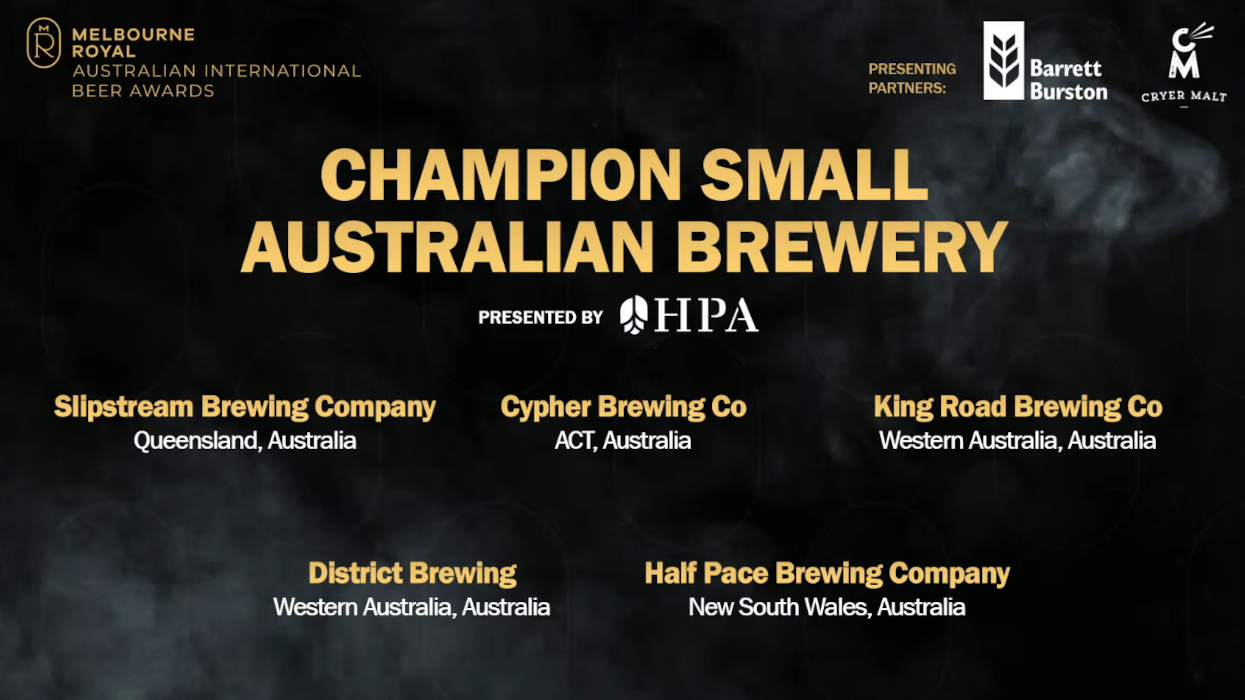
The ‘contenders’ for each category are announced on the night,6 which gives some context for the other contestants — Cypher, for example, announced their status with (justifiable) pride. But this opaque scoring system is why Slipstream, despite taking home the most gold medals by far, had to sit back and watch King Road reclaim their Small Australian Brewery crown.
However else you look at it, though, King Road’s performance was incredible: the best MPC and PPE of the local champions — and winning the trophy for Traditional IPA, one of the most hotly contested categories, with the second-highest number of entries, and more gold medallists at that final table than any other. (We can debate the sense in an “NZ Cold IPA” running in the ‘traditional’ bracket another time.)7
There was a bit of a raised eyebrow in some of the reaction to Hawkesbury Brewing Co. taking the Medium tier title. As the makers of notorious line of plastic-bottle RTDs, they’re doubtless perceived as commodity brewers / beverage manufacturers — but you can’t really argue with their results, which included high MPC and PPE, diverse golds, and a trophy for their rebranded core range stout.
Something similar happened with Pirate Life’s win in the Large tier, despite their demonstrably strong performance. Founded at the crest of the craft boom, they’re often derided as one of the main ‘sellouts’ of the era and are now ultimately an Asahi subsidiary. Amid growing (and, let’s be real, actively stoked) economic nationalism in the Australian beer market, two ‘foreign-owned’ entities (Pirate Life & Mountain Goat) being bestowed ‘Australian Champion’ status hit a sour note with some.
An independence interlude
So let’s look at the awards through the lens of ownership. “Independent” breweries account for the vast bulk of Australian beer at the AIBAs; about 85% of both entries and medals awarded, and winning all but two of the style category trophies that didn’t go overseas, which is about the same proportion. No real correlation between independence and success appears overall.8
| N | T | G | MPC | PPE | |
|---|---|---|---|---|---|
| CUB / Asahi | 128 | 1 | 20 | 87.5 | 1.53 |
| Lion / Kirin | 34 | 1 | 3 | 79.4 | 1.26 |
| Coopers | 20 | 0 | 2 | 75 | 1.2 |
| Independent | 1254 | 12 | 138 | 80.1 | 1.36 |
Remember the Australia-wide statistics were 80.1 MPC and 1.25 PPE. So, as a whole, the extremely broad spectrum of “independent” beer is fractionally ahead on the latter — although of course that’s very unevenly distributed. Meanwhile, the Lion group (including Little Creatures, Boags, Tooheys) washes up very close to the overall average thanks to a boost from Stone & Wood, and Asahi-owned brands contested in high numbers and are considerably ahead of the curve, this year.
Indeed, all of Asahi’s constituent parts did really well — except Green Beacon. Their ‘mainstream’ facilities at Abbotsford and Yatala (which make Carlton, Great Northern, etc.) scored 100 MPC with over a dozen beers each, 4 Pines were a contender for the Large Australian Brewery title, and Balter have had three years in a row of impressive numbers. But Green Beacon (acquired in 2019, not long after they won the Champion Medium Australian Brewery title) are languishing and dragging them down, with their MPC and PPE getting worse every year I’ve done the calculations; the group’s scores would go up to 91.1 MPC and 1.63 PPE without them. It reminds me of Fixation’s post-buyout nosedive, which first made me jump into the messy ocean of AIBAs data.
Hopefully it’s obvious that independence doesn’t guarantee “good” beer, just as giant conglomerates don’t necessarily make “crap” — an all-too-common sentiment among people who are probably mainly motivated by criticisms of them as companies, many of which are valid.9 There’s doubtless some structural advantages in size (more resources for quality control, etc.) but they’re no guarantee, and they likely kick in long before multinational scale. The euphemistically-named “families” of indie beer10 who entered in significant numbers all outdid their smaller peers: Allpour (Mismatch & Jetty Road) had 100 MPC and 1.72 PPE, Good Drinks (Gage Roads, Alby, etc.) scored 86.3 MPC and also 1.72 PPE, and Social Drinks (Hawkers & White Bay) got to 88 MPC with an impressive 1.88 PPE.
In this context, the extra titles for the Champion Independent Beer and Independent Brewery11 seem superfluous and awkward. They’ll either go to a brewery who already won outright (and just happens to be “independent” — and there’s no shortage of those) or they’ll look a lot like a kind of runner-up. All we learned from them this year was that King Road outperformed Hawkesbury head-to-head, and Stomping Ground’s rauchbier was somewhere between the second- and seventh-best beer on the final ‘Best in Show’ table.
The overseas contingent
Speaking of “foreign-owned” breweries, a sizeable fraction of the AIBAs — nearly a third of all the beers — easily justifies that acronym’s second letter: International. The largest contributor is China (202), followed by the United States (128) and New Zealand (106); a slight increase by the former balancing a decrease by the latter but staying pretty constant overall. That Champion International Beer win might’ve put some more attention on Chinese entrants, but performance-wise their collective stats were basically unchanged from 2025:12 one style trophy, ~20 gold medals, ~70 MPC.
American breweries had a relatively rough time. As a bloc, they underperformed, perhaps because a high proportion of their submitted beers were in hoppy styles like IPA, and so particularly prone to suffering over long travel. Three of them were officially named as ‘contenders’ for a championship, but I think it’s really only Breakside who you can single out for acclaim. Their four entries (two strong stouts, but also an American Pils and a WCIPA) scored 100 MPC and 2.25 PPE, which is right up there among the highest on that metric.
New Zealand — certainly at least partially on account of proximity — fared conspicuously well. Altitude, retaining the Champion Small International Brewery title they won last year, unambiguously had the best overall stats of any champion in this round: 100 MPC and 1.90 PPE from 20 entries, while taking two style trophies (Pilsner and Modern Pale Ale). And Garage Project retook the Large tier crown, which has passed back and forth between them and legendary Germany brewery Weihenstephaner since 2021.
In between those tiers, the Medium title went to COEDO from Japan. But of all the championship categories, this was arguably the one with the weakest performances with no trophies, fewer medals, and markedly lower MPC and PPE scores posted by its contenders13 — which included two of those Americans I mentioned: defending champion 49th State (who did fine) and No-Li Brewhouse, a weirdly prolific entrant who I’ve never seen do better than 40 MPC. No-Li are the kind of brewery I have in mind when I mention ‘spamming’ the awards; they fling beer all over the world and only report hits without the context of many more misses.
Vestigial categories in need of some work
Two other ‘headline’ winners are announced each year: a trophy for the Best New Exhibitor, and an Australian Nomad Brewer award — formerly known, until this year, as the “Gypsy” category (yikes).
The former should probably be called “Best First Time Exhibitor” since the winner, Froth from Western Australia, was established nearly a decade ago, and something similar happened the first time I analysed the AIBAs, two years ago. Weirdly, in contrast to the regular championships determined by an entrant’s best four scores, this one takes just the top two into account,14 for no clear reason. That makes things pretty volatile, and for the record, every other named ‘contender’ here (Brave, Crafty Monk, Principle, and Sun Lab) did better on MPC and PPE.
But the Nomad category should just go. Its new name is a genuine improvement, but still not great.15 Fundamentally, ‘Best Brand Without A Brewery’ simply isn’t an interesting segment of the market anymore. The winner, Shack Bay from Victoria — whose beer was produced by Ocean Reach (100 MPC, 1.43 PPE), and who ironically announced plans to build their own premises a few days after the ceremony — was described as the sole contender for the title this year. The published results don’t specify which beers are contract brewed but the highest profile ones I recognised were the Dan Murphy’s and Liquorland ‘house brands’ which scored terribly, as they did last year, and the year before.
Underappreciated excellence
One of the reasons I started these analyses was to highlight praiseworthy results that are only really obvious with a full results table, such as Slipstream’s incredible gold medal haul (or Gage Road’s, come to that). Or those which take a bit of math to tease out, like how Uraidla scored the highest PPE of any brewery entering at least five beers (if we treat that as a breakpoint for statistical significance). But I’ll leave you all to poke around with the data and find some more worth celebrating.
I’ll close by noting what seems to be a strange omission by the organisers. One of my favourite elements of the AIBAs is the Consistency of Excellence Medal, an extra honour bestowed on beers which earn a gold (in the same format and class) three years in a row.16 There are only a handful of recipients each time; it’s a genuinely impressive feat that warrants special recognition.
But two of last year’s winners — Holgate’s ‘Road Trip’ IPA in cans, and Balter’s Hazy IPA in keg — struck gold again,17 making four years in a row, but they were left off the list of honorees. I’d been tipped off about the former, and found the latter myself after a few minutes spent checking.18 So, for whatever it’s worth, I think they each deserve a Platinum Consistency Tiara, or something.
And… that’s definitely enough for now. There really is a mountain of data generated by each round of this competition — and a lot of it is frankly a mess — and I am not a trained numbergoat, or whatever would climb such a thing in this metaphor. But I do my best, and weirdly enjoy the several days of data entry, clean-up, and crunching. I hope that if you’ve made it this far you found it interesting and/or entertaining. If you did, odds are you know someone else who would, too; send it to them for me.
minor addendum, 10 June: I had prepared the table below — showing the relative contestation of each trophy class and the frequency of beers being awarded either any medal or a gold — but didn’t discuss this in the actual post. For posterity, the data is all here. As with the NZ awards, it’s interesting to see how much variability emerges.
| Category | Brewers | Beers | MPC | G | GPC |
|---|---|---|---|---|---|
| Australian-Style Lager | 58 | 92 | 87 | 11 | 12 |
| European-Style Lager | 73 | 103 | 68.9 | 6 | 5.8 |
| International Lager | 75 | 112 | 68.8 | 12 | 10.7 |
| Pilsner | 104 | 143 | 73.4 | 11 | 7.7 |
| Amber / Dark Lager | 32 | 39 | 71.8 | 5 | 12.8 |
| Australian-Style Pale Ale | 81 | 113 | 74.3 | 10 | 8.8 |
| Modern Pale Ale | 63 | 85 | 82.4 | 10 | 11.8 |
| International-Style Pale Ale | 100 | 139 | 75.5 | 10 | 7.2 |
| British and European Style Ale | 39 | 45 | 71.1 | 1 | 2.2 |
| Traditional India Pale Ale | 133 | 196 | 83.2 | 27 | 13.8 |
| Modern India Pale Ale | 137 | 203 | 81.8 | 21 | 10.3 |
| Amber / Dark Ale | 50 | 62 | 80.6 | 5 | 8.1 |
| Porter or Stout | 95 | 113 | 82.3 | 16 | 14.2 |
| Reduced / Low Alcohol | 101 | 159 | 77.4 | 14 | 8.8 |
| Non-Alcohol Beer | 38 | 64 | 67.2 | 6 | 9.4 |
| Wheat Beer | 60 | 77 | 54.5 | 7 | 9.1 |
| Belgian / French Style Ale | 37 | 55 | 81.8 | 12 | 21.8 |
| Fruit Beer | 55 | 67 | 71.6 | 4 | 6 |
| Wood / Barrel-Aged Beer | 30 | 55 | 83.6 | 9 | 16.4 |
| Specialty Beer | 76 | 120 | 80 | 15 | 12.5 |
| Flavoured Specialty Beer | 64 | 83 | 77.1 | 10 | 12.0 |
| Grand Total | 369 | 2125 | 76.8 | 222 | 10.4 |
- Melbourne Royal (FKA the Royal Agricultural Society of Australia) used to say the AIBAs was “the largest annual beer competition worldwide, encompassing both draught and packaged beer” (2024 Results Booklet, p4) which is a mouthful, but apparently accurate. Recently, they’ve taken to just saying it’s the largest (2026 Results Booklet, p4) which is pithier, but plainly false — unless they have some weird metric they’re not sharing (I did ask; no reply). In any remotely normal manner of speaking, the World Beer Cup is bigger. That doesn’t mean it’s “better” but I’ll get to that next…
- Last year it was a dark lager from Wedgetail. Each brewery’s animal avatar has been a useful stand-in while I’m living too far away to take photos of the winning beers themselves.
- And remember always that at the AIBAs — like the NZBAs and many others, but unlike the World Beer Cup — a medal is more like a grade; a category can have several at each rank, or none.
- This subset is about half of all the breweries (two thirds of the Australian ones) and three quarters of all the beers. I’ll draw attention to a few interesting results that fall outside this range, and if you want the full set to play around with it’s available as a Google Sheet. I have completely ignored the cider component of the competition. Massive thanks to the TablePress plugin — and to its creator for helping squash an annoying bug.
- 2026 Entry Booklet, p14. To consign repeating myself to a footnote: this is, frankly, a weird way to decide things. The New Zealand awards has switched to more straightforwardly counting gold medals. And if the AIBAs are wedded to this points-based approach, they should publish them, like the Royal Queensland Beer Awards does.
- Weirdly, these lists don’t seem to be published anywhere else. So, for the record: Small Australian Brewery — Cypher, District, Half Pace, King Road, Slipstream; Medium Australian Brewery — Felons, Hawkesbury, Margaret River, Mismatch, Philter; Large Australian Brewery — 4 Pines, Brick Lane, Gage Roads, Hawkers, Pirate Life. Small International Brewery — Altitude, Hong Kong Beer Co., Spring Valley, Slowboat, Three Sisters; Medium International Brewery — 49th State, COEDO, Long Sun, No-Li; Large International Brewery — Breakside, Carlsberg China, Garage Project, Weihenstephaner, Urbrew. I’ve grouped them all together on that Google Sheet for easier comparison.
- Okay, you twisted my arm: I think it’s fine, though I can see the tension. There are all kinds of oddities and difficult edge cases in carving up the categories. But beer styles are marketing terms much more like music genres than chemical elements out there waiting to be discovered. ‘New’ ones take a while to settle in; most beers with ‘Cold IPA’ in their name were entered in Class 11E ‘Experimental IPA’ (in the Modern IPA trophy class), but others appeared in 1B (Australian Style Low Carbohydrate Lager) and 3C (American Style India Pale Lager), which makes for an excellent little lesson in the history and evolving understanding of this style, and its connection to Brut IPA and overtly hoppy ‘New World’ lager styles. A comparable clash happened with a Parrotdog Cold IPA at the 2024 NZBAs.
- This is my best attempt at coding the different breweries; I had the same exercise last year to build on, and again checked against the Independent Brewers Assocation directory and information from The Crafty Pint.
- Boak & Bailey talked about (and tested!) this impulse recently, as it applies to Brewdog’s Punk IPA.
- “You keep using that word. I do not think it means what you think it means.”
- Which were founded last year and initially sponsored by the Independent Brewers Association, who used to run their own awards, The Indies. They had parked that idea, and have now decided to transition to a more people-focused event — which sounds worthy enough, but will inevitably be vastly more insular. I was curious to note that packaging supplier Orora was instead attached to these categories for 2026 (with an actual prize package, an idea that should be emulated elsewhere). The IBA told me that Melbourne Royal hadn’t actually asked if they’d like to continue their connection with the awards, which seems bizarre, especially since the Entry Booklet (p14) defines eligibility in terms of IBA criteria.
- Curiously, the AIBAs count Hong Kong separately from China, which is an unexpectedly bold geopolitical take. The awards were founded in 1993, which is pre-handover, so maybe it’s just a relic of how their database was set up. Either way, it doesn’t change much — so far as the statistics are concerned, I mean.
- Again, I’ve grouped them and their stats on the Google Sheet I mentioned in note six.
- 2025 Entry Booklet, p15
- For one thing, there’s a well-established Australian brewery called Nomad. They entered these awards! For another, the element of wandering with no fixed location doesn’t fit with how contract brewing arrangements work these days.
- 2026 Entry Booklet, p13
- 2026 Results Booklet, p45 and p51
- And then many more running in circles, because I had thought that there was precedent for rewarding a four year run, but now I believe that the honour was actually incorrectly awarded to someone in 2023, which is a very old can of worms to open now…