
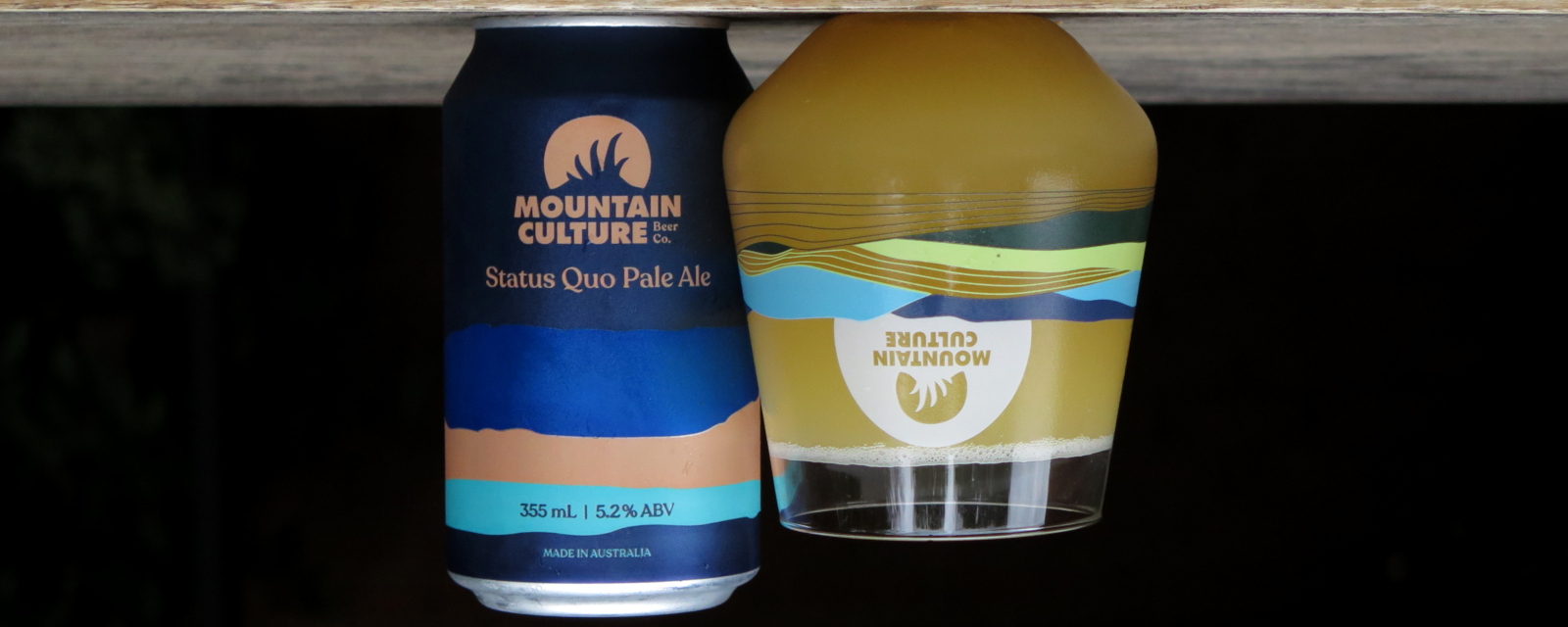
Voting is now open for the 18th GABS Hottest 100,1 and Mountain Culture — having placed #1 for the past three years running — recently launched their latest campaign, this time with a Ted Lasso theme. With the tactics and intensity that secured their blockbuster win in the 2022 competition, they’ve helped cement a “new normal” for the poll, one of relentless targeted promotion from a few loud voices. It undermines the countdown’s value and appeal — and, frankly, doesn’t reflect well on them.
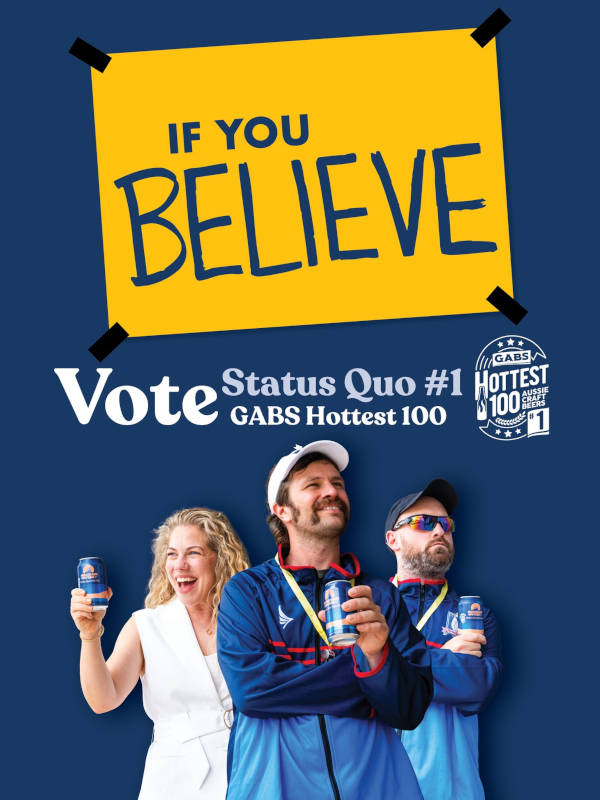
First airing in late 2020, Ted Lasso would’ve made an excellent reference point for Mountain Culture’s original Hottest 100 push. A fish-out-of-water story of an American leading an underdog team from obscurity to the big leagues? Perfect.
But it’s pretty much impossible to overstate the difference between the company then and now. They had a freshly-upgraded production brewery and second taproom when they kicked off that first campaign; it was soon expanded again, multiplying their capacity several times over. While going for their second Hottest 100 win, they appointed a Chief Marketing Officer who was previously “global brand strategy and creative director” at Nike. Then in late 2024, they took on an undisclosed amount of investment from Pat Cummins, captain of the Australian men’s national cricket team, one of the highest-profile people in the country and reportedly the best-paid player in the world. He’s also a pitchman for Liquorland, one of the two huge alcohol retailers, and can be seen with a can of Status Quo very-conspicuously in hand in one of their recent ads.2
And from those two original venues, their footprint has since grown to six across three states. In mid-2024 they spread from the far West into Sydney’s inner suburbs, opening ‘Village’ in Marrickville with Wildflower and taking over Atomic’s Redfern site when it was closed by its parent company. Then, in May this year, they bought the ruins of Fox Friday from its administrators and — after quickly flipping two of its component parts — rebranded both the Hobart taproom and Melbourne brewpub.
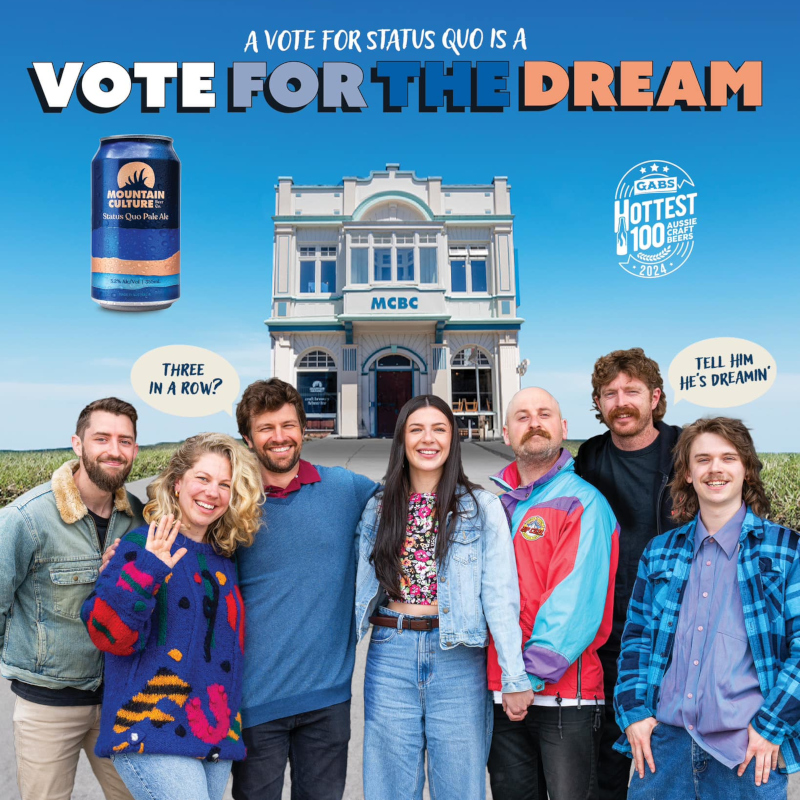
Whatever Mountain Culture are now, “underdog” ain’t it. They have earned their successes and I’m still a big fan of a lot of what they do,3 but this side of them — continuing to downplay how they’ve changed and claiming the mantle of the brave battler to rally support in a survey of beer drinkers — is getting ridiculous. Dressing DJ up as Darryl Kerrigan and riffing on The Castle last year was already a stretch; pretending they have anything in common with AFC Richmond by putting him in a Ted Lasso costume in 2025 is either worryingly un-self-aware or shockingly cynical — no one wants to watch an inspirational comedy-drama about a well-heeled club gunning for its fourth consecutive Premiership.
But this kind of campain is the “new normal” for the Hottest 100: make a pitch about the general worthiness of your “team” and direct sympathetic voters towards a specific one of your beers, to maximise its chances; asking some flagship beer to stand in for your support of its brewery, essentially. To be clear, Mountain Culture didn’t start this — and previous back-to-back winners Bentspoke made the same play, to an extent, to get their Crankshaft IPA to the top spot.4 The combination of Status Quo’s upstart win (debuting at #1) and rapid expansion, however, seems to have inspired most of the industry to follow their lead, keen for a similar trajectory in their fortunes and assuming (rightly or wrongly) that a correlation is a cause.
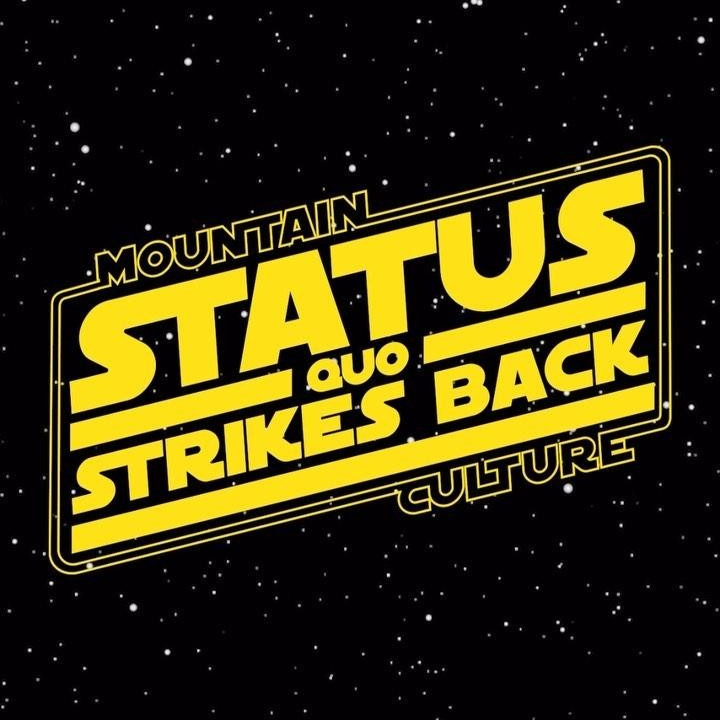
So this is now the dominant form of communication around the Hottest 100: “Vote for this beer because we’re the longest-surviving indie in the running” or “because no local brewery has made the podium before” or “to put this small town on the map (while we awkardly riff on what its name sounds like in English)” or just plainly “because it’s tough being a small brewery and we could use the boost.”5 We’re certainly a long, long way removed from “tell us your five favourites and we’ll count ’em all up.”
I know, I know. It’s just a bit of fun. But it’s also clearly perceived as commercially important by the breweries and it felt like something worth watching to get a sense of the zeitgeist, a way of tracking trends in the industry and the subculture.6 Maybe it was always too distorted to be meaningful — thanks to uneven promotion and the vagaries of the voting system — but whatever “use” it did have has been diluted (further) in this new era.
Part of the problem is that the organisers are secretive about the actual numbers. This isn’t like a real election where you can see if an incumbent opponent squeaked to victory and is therefore vulnerable — or if they’re so far in the clear your efforts are better redirected elsewhere. They’ll happily boast that fifty-five thousand people voted7 — but when I asked whether they’d comment on just the relative gap between first and second (or first and tenth, even), I got no reply. A lot of breweries might be wasting their time and resources, making a bunch of noise with little effect; for the people running the poll, it’s all just more eyeballs and emails, so they won’t mind.
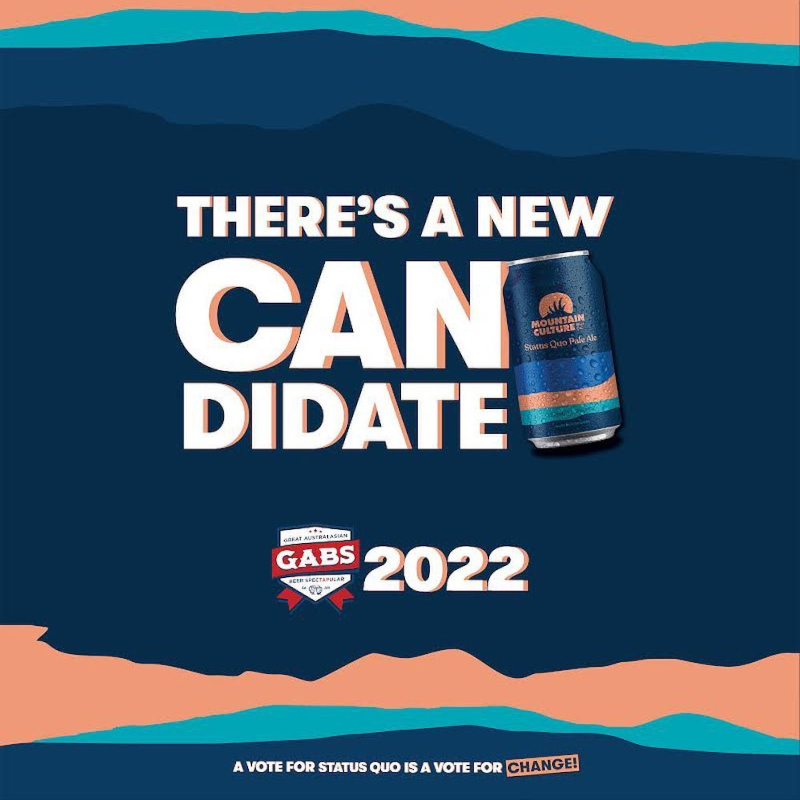
Mountain Culture’s first campaign was premised around the fact that it was boring seeing the same names at the top year after year. The slogan “A Vote For Status Quo Is A Vote For Change” has gone from truly brilliant to bitterly ironic. The dignified thing for them to do was to ‘retire’ last year. Three-in-a-row is universally recognised as a special achievement: a hat-trick, a trifecta, a three-peat. Four is… another one. From a brewery with a Chief Marketing Officer who touts their “creativity and innovation” and “disruptive spirit” we get more of the same: a poorly-fitting pop-culture pastiche that doesn’t match the reality of who they are now, and which worsens the problems they themselves identified years ago.
Now, the endgame options are: they get beaten by someone spending piles of money and pushing even harder — although good luck to anyone going up against Pat Cummins’ three million social media followers8 — or they keep winning, everyone gives up, and the entire competition atrophies into irrelevance. Neither seems great.
- A long-running annual Australian (and latterly expanded to New Zealand) survey of popular “craft beers” (left largely undefined) modeled on the decades-long cultural phenomenon of the Triple J Hottest 100 music poll.
- Indeed, the only other identifiable beer present is Tinnies — Liquorland’s contract-produced (and decidedly average, going by its performance at the AIBAs) store brand. That new CMO was also quoted as saying Mountain Culture was pivoting its attention away from small bottleshops in favour of focusing on the two major chains.
- For what it’s worth, as I write this — on a chilly (1°C) evening in Washington D.C. — I’m wearing a treasured big cozy Mountain Culture hoodie.
- I think — after a little digging and some brief consultations — that Bridge Road might have pioneered both the “if you like us, vote for this” strategy in general and (in 2018) the “Vote #1 Whatever” phrasing, specifically. I’m happy to be proven wrong by earlier examples, though. Weirdly, I don’t think it’s ever been publicly confirmed whether (or precisely how) a voter’s ranking actually matters. I am reliably informed that it once did (which honestly seems at least undercommunicated if not outright insane) but the current owners have ignored my annual requests for clarification.
- These are all real examples that you may well have already encountered, but naming and shaming isn’t really the point here. Besides, I run too many ad-blockers and avoid too much social media to be able to do a fair survey.
- My blogging comrade Daniel Ridd had a kind of obsessive fun with it that reminded me a lot of what I do with the Australasian beer awards.
- Or at least “registered to cast their votes” which is weirdly specific phrasing now that I think of it. Also — and I suspect this might be relevant to the rest of the post, here — that’s nearly 10% down on the figure they gave for the 2023 survey.
- There doesn’t seem to be anything in the rules to stop non-Australians voting in the poll, so a “John Oliver and the Pūteketeke” kind of situation seems entirely possible — but at least Forest & Bird make the final tally public.
Always great to read your stuff Phil!
A few thoughts of my own. Yes, the H100 is largely meaningless these days. Standing outside the day-to-day beer world these days, the count barely touches anyone outside of the most pointy-end craft enthusiast, so my old equation of marketing x hype squared is probably now:
success = (Y² × (1 + 0.2Z)) − 5X, where
• X = market disinterest
• Y = marketing spend
• Z = product hype
Completely agree that claiming underdog status in this arena – for what the H100 actually is – is pretty lame. The H100 believes itself to be relevant to a mainstream market and if it was, this would be a fit. In truth, it’s on the scale of the Parish raffle and a small spend can buy an inordinate amount ‘luck’.
That said, with so few success stories, it’s nice to see any success in the small* brewing industry at the moment. It is also nice to see a small brewery bring some creativity to their marketing that doesn’t involve a hop pun or worse.
I would like to celebrate that, but would also like to see them do that underdog marketing in the Olympic pool of the mainstream market rather than the wading pool of GABS, and then celebrate like they have won at the Olympics.
*I won’t say independent because, if history tells us anything, independence is only valuable until something more bankable comes along.